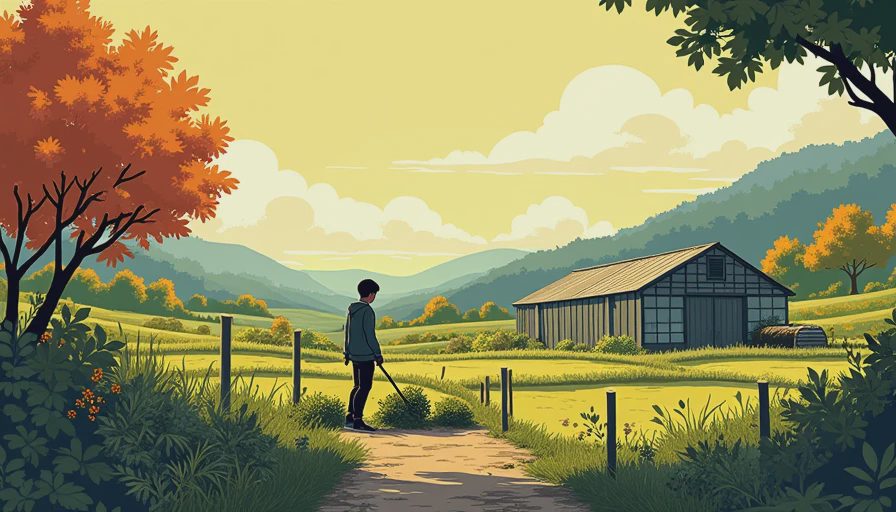
I did not come to simulation and management games through strategy forums or optimization guides. A large part of the taste was formed earlier, on the page, through manga that refused to rush.
These were not action series. They were stories that treated time as something to be lived inside rather than skipped through. Days repeated with small variations. Characters changed slowly. Systems — social, seasonal, personal — revealed themselves through accumulation instead of exposition. When I later started playing farming sims, colony builders, and long-session management games, the same qualities kept drawing me back.
This is not a ranked list of “best manga.” It is a short account of the ones that most clearly trained the habits I still bring to slow-burn simulation games.
The Value of Ordinary Time
A lot of manga treats the daily routine as the point rather than the background. Meals, weather, small conversations, the way a place looks in different seasons — these details are given real weight. Nothing dramatic has to happen for a chapter to feel complete.
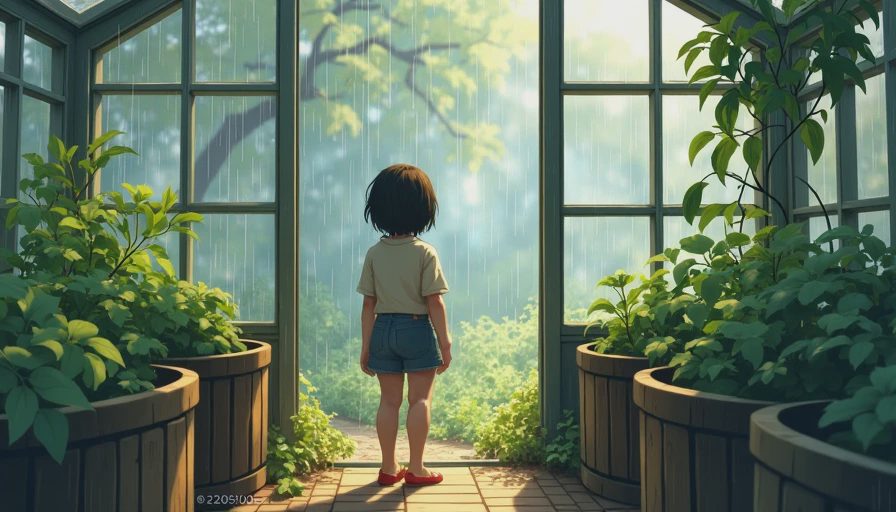
That sensibility maps directly onto the best farming and management games. The pleasure is not only in unlocking the next building or reaching a new production tier. It is in the texture of the loop itself: the walk across the farm at the start of the day, the sound of rain on a greenhouse, the quiet satisfaction of a storage chest filling in an orderly way. Games that skip or compress that texture in the name of efficiency usually lose me faster.
Patience as a Design Feature
Certain series are willing to let change happen across volumes instead of chapters. A character’s growth is measured in small behavioral shifts. A relationship deepens through repeated ordinary interactions. The world does not constantly escalate; it settles and then deepens.
Slow-burn simulation games that work for me do something similar. Early hours establish a baseline. Mid-game systems emerge from that baseline rather than replacing it. Late-game complexity feels like an extension of habits you already formed, not a sudden new rule set. When a game tries to stay exciting by constantly introducing higher stakes or bigger numbers, it often breaks the spell that made the early hours appealing.
Systems That Reveal Themselves Through Play
The manga I return to rarely explain their internal logic in large exposition dumps. You learn how a household runs, how a rural community functions, or how a particular craft works by watching characters live inside those systems. Understanding accumulates.
That is the same quality I look for in management games. The best ones teach through interaction. You discover why a certain layout works better, or why one production chain is more resilient, by running into the consequences and adjusting. Heavy tutorialization or constant UI hand-holding can flatten that process. I prefer games that trust the player to notice patterns over time.
Specific Echoes

A handful of series left clearer fingerprints than others.
Stories centered on rural or semi-rural life, with attention to seasons, food, and community rhythms, made farming sims feel like a natural extension rather than a novelty. Series that followed quiet professional or craft-focused lives made me more interested in games where the “work” itself is the loop — shop management, careful production, the daily maintenance of a small system. Long-form character studies that measured growth in years rather than arcs made me patient with games whose best qualities only appear after dozens of hours.
I am deliberately not turning this into a recommendation engine. The point is not that any specific title is required reading. It is that a certain way of paying attention — slow, observational, comfortable with repetition — was trained on the page long before it was applied to Steam libraries.
Why It Still Matters
Simulation games are full of systems that can be optimized. Many players enjoy that. I do too, up to a point. But the games that stay with me longest are the ones that also reward simply existing inside the space they create. The manga that shaped my taste made that preference feel natural instead of indulgent.
Good slow-burn simulation games do not just give you systems to master. They give you a place and a pace worth returning to. The page taught me to recognize that quality when I see it.



Letters
No letters yet — be the first to write.