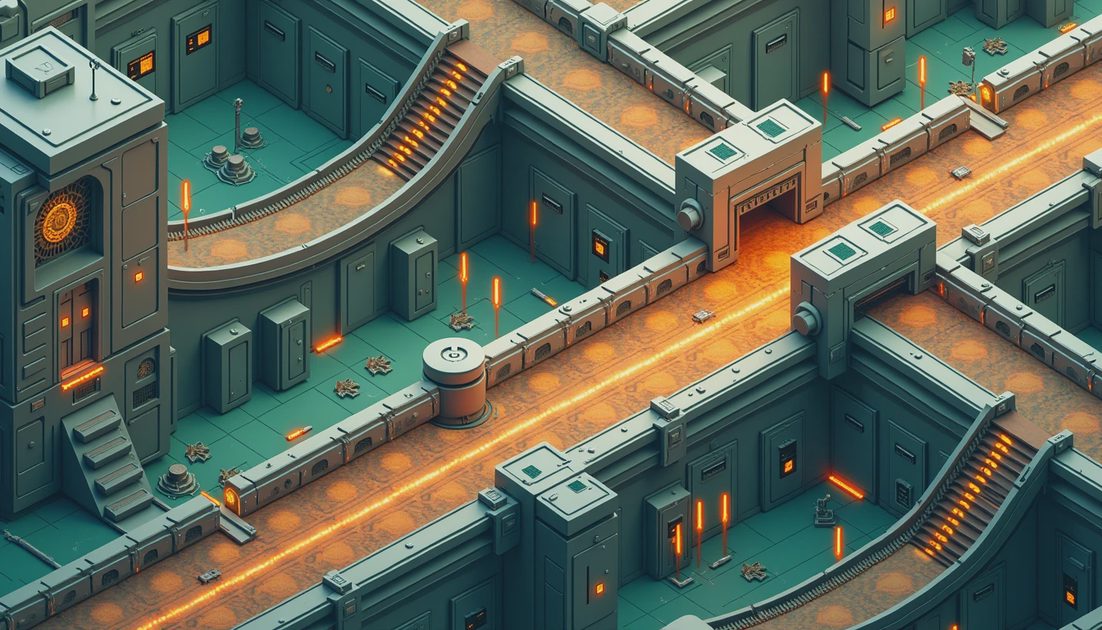
Spectacle is easy. Pretty trailers, lush foliage, dramatic lighting, and a cinematic camera angle can make almost any game look important for thirty seconds. Systems are harder. They either click together in a way that keeps you thinking three steps ahead, or they collapse into busywork the moment the novelty wears off.
This list is for the second kind of player.
If you care more about production chains, logistics bottlenecks, progression loops, and the quiet satisfaction of watching a well-designed system run itself than you do about visual fidelity or narrative set pieces, these are the simulation and management games on Steam that still deliver. No ranking by graphics. No “hidden gem” inflation. Just games whose core loops reward attention to how things actually work.
What “Systems Over Spectacle” Actually Means Here
I’m looking for titles where:
The systems talk to each other in meaningful ways
Optimization feels rewarding rather than mandatory homework
The game stays interesting after the early-game dopamine fades
You can explain, in one sentence, who the game is actually for
If a game relies mostly on atmosphere or presentation to carry weak mechanics, it doesn’t make the cut.
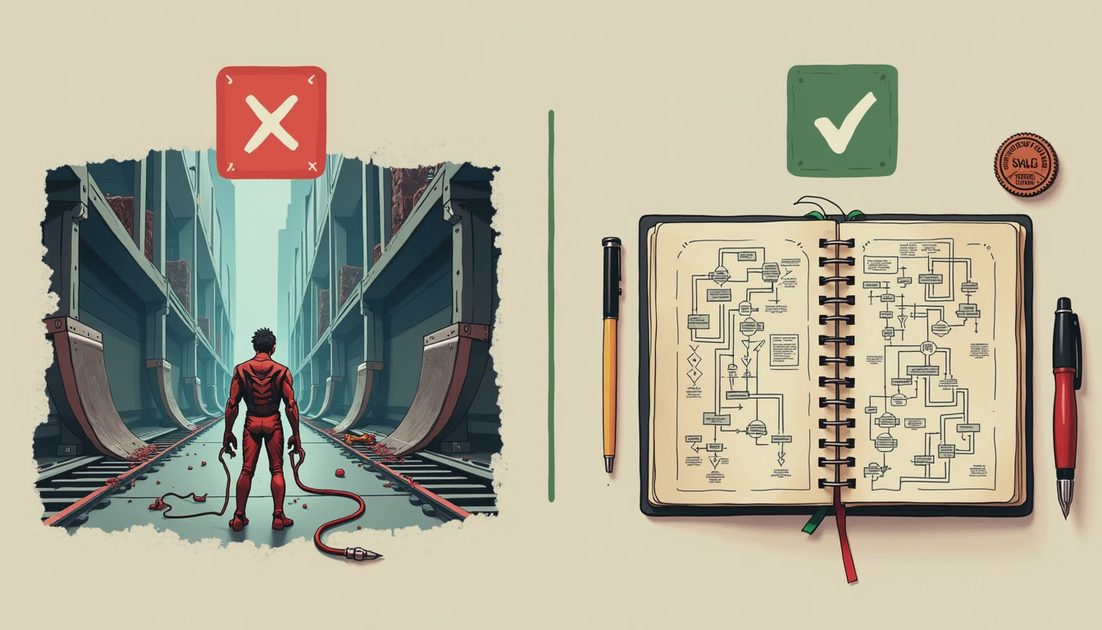
Factorio
Still the benchmark for pure systems depth.
You start with a few assemblers and end up redesigning entire logistics networks because one belt is three seconds too slow. The combat is secondary. The real game is the factory itself — ratios, throughput, bottlenecks, and the slow realization that your beautiful main bus is now a problem. The Space Age expansion only deepened the late-game puzzle without watering anything down.
Who it’s for: Players who want the purest expression of “build a machine that builds the machine.”
Who it’s not for: Anyone who needs constant visual spectacle or a strong narrative through-line.
Satisfactory
Factorio’s three-dimensional cousin.
Same core addiction — resource extraction, production chains, automation — but in first person, on an alien planet, with vertical building and a stronger sense of place. The systems are slightly less ruthless than Factorio’s, but the satisfaction of watching a multi-story factory hum is hard to beat. 1.0 polished the experience without sanding off the optimization edge.
Who it’s for: People who want factory logistics with more physical presence and exploration.
If you liked Factorio but wished it felt less spreadsheet and more place: start here.
Oxygen Not Included
Colony management as engineering problem.
Every gas has properties. Every liquid has temperature. Your base is a sealed system of pipes, pumps, filters, and life-support that can fail in cascade if you get careless. The game never stops teaching you that comfort is temporary and thermodynamics is permanent. It looks modest. The systems are not.
Who it’s for: Players who enjoy solving interconnected problems more than managing personalities.
Note: The learning curve is real. The payoff is watching a once-chaotic base become stable.
Timberborn
Beavers, water, and late-game automation.
Timberborn hit 1.0 in early 2026 and finally delivered on the systems promise that Early Access only hinted at. Drought cycles force constant redesign of dams, levees, and water distribution. The newer automation tools (sensors, timers, relays) turn late-game colonies into genuine logic puzzles. It’s one of the few city-builders where the environment itself is a core system you have to respect.
Who it’s for: Players who want vertical colony building with meaningful environmental pressure.
Why it belongs here: The water system is not flavor. It is the game.
Against the Storm
Roguelite city-building with tight, readable systems.
Each settlement is a limited-time run. You balance villagers, resources, and the Queen’s increasingly strict demands while the forest actively works against you. The systems are dense but fair — every decision has visible consequences, and the best runs feel like solving a living puzzle rather than optimizing a static map. It respects your time in a way most city-builders don’t.
Who it’s for: Players who like systems depth but don’t want a 100-hour single save.
Tone: Cozy on the surface, quietly demanding underneath.
Captain of Industry
Industrial logistics without the combat distraction.
You manage an entire industrial economy from raw extraction to finished goods, with a strong emphasis on supply chains, power, pollution, and long-term planning. It sits somewhere between factory builder and economic sim. The systems reward foresight more than micromanagement, and the mid-to-late game becomes a satisfying exercise in scaling without collapse.
Who it’s for: Players who want the logistics of Factorio with more of a civilizational feel.
Strength: The production chains feel grounded and consequential.
RimWorld
Personality systems that actually matter.
RimWorld is often sold as a story generator, but the real depth is in how colonist traits, moods, skills, and relationships interact with the environment and your base design. A single bad mood can cascade. A well-designed hospital or production chain can prevent disasters before they start. The systems are soft compared to pure factory games, but they are deep and reactive.
Who it’s for: Players who want management systems that include people as unpredictable variables.
Caveat: Mods can turn it into almost anything. Vanilla already has enough systems to chew on for a long time.
Dyson Sphere Program
Scale as a systems challenge.
You begin on one planet and end up coordinating interstellar logistics. The early game feels familiar to factory fans; the late game becomes a problem of distance, throughput, and planetary specialization. It is one of the few games that makes “bigger” feel like a genuine systems evolution rather than just more of the same.
Who it’s for: Players who want factory logistics that eventually span a solar system.
Current state: Still in Early Access, but the core loop has been solid for years.
Shapez 2
Pure belt-and-shape optimization.
No combat, minimal story, almost no fluff. You route shapes through increasingly complex production lines. The satisfaction is entirely in the clarity of the systems and the elegance of your solution. It is the cleanest “systems for systems’ sake” experience on this list.
Who it’s for: Players who want the belt-routing joy of Factorio without the base defense or resource scarcity pressure.
Quick Filter for Your Next Install
Want the deepest pure logistics? → Factorio
Prefer first-person and vertical building? → Satisfactory
Like sealed-system engineering puzzles? → Oxygen Not Included
Enjoy environmental pressure and vertical colonies? → Timberborn
Prefer shorter, tighter runs? → Against the Storm
Want industrial scaling with economic weight? → Captain of Industry
Like people as systems variables? → RimWorld
Crave interstellar scale? → Dyson Sphere Program
Just want elegant belt puzzles? → Shapez 2
Spectacle fades. A well-designed system keeps revealing new problems and better solutions long after the trailer music stops.




Letters
No letters yet — be the first to write.