If you are searching for games like Factorio, you probably do not just want another crafting game with a conveyor belt slapped on the cover. You want a system that starts small, becomes gloriously complicated, and rewards you for fixing yesterday's terrible plan. Factorio remains the king of that particular brain itch, but there are plenty of worthwhile alternatives on Steam. The trick is knowing whether you want deeper logistics, more exploration, friendlier building, or a completely different kind of management headache.
What makes a game feel like Factorio?
The obvious answer is automation, but that only covers the surface. The best games like Factorio create a loop where every solution introduces a more interesting problem. You mine one resource, then need power. Power requires fuel or infrastructure. Production increases, so storage and transport become bottlenecks. Suddenly a humble starter base has turned into a sprawling industrial organism that needs a traffic plan.
Factorio also makes optimization feel personal. You are not simply unlocking upgrades from a menu; you are redesigning a working machine while it is still running. That feeling is why players who enjoy spreadsheets, city builders, and management sims often cross over into factory games. Good management games do not just waste your time — they teach you how you like to spend it.
The recommendations below focus on different parts of that experience. Some are close mechanical relatives. Others borrow the planning, production, and problem-solving appeal while adding exploration, combat, farming, or a more relaxed pace.
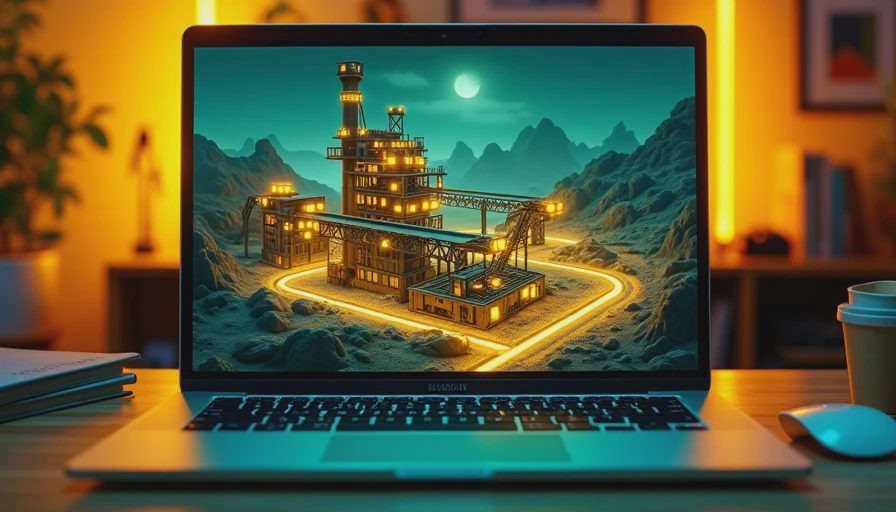
Satisfactory is the best 3D alternative
If you liked Factorio but wish you could walk through the factory you designed, Satisfactory is the cleanest recommendation. It moves the action into first-person 3D, letting you build conveyor lines across cliffs, forests, deserts, and suspiciously attractive alien landscapes. The production chains become demanding quickly, especially once you begin manufacturing advanced parts for larger milestones.
The important difference is spatial rather than purely mechanical. In Factorio, you usually read the factory from an overhead view. In Satisfactory, you physically navigate it. A messy junction can be difficult to understand because it exists in three dimensions, but building a huge elevated bus or an orderly rail network feels fantastic when the camera gives you a full view.
Satisfactory is for the player who enjoys construction as much as throughput. It also works well if combat-heavy survival sandboxes are not your thing. The world has hazards, but the main event is still planning a better industrial layout. Buy it when you want long sessions and a strong sense of place, not when you want a compact weekend game.
Dyson Sphere Program goes much bigger
Dyson Sphere Program takes the factory concept beyond one planet. You begin with basic mining and assembly, then expand across multiple worlds and eventually entire star systems. Compared with games like Factorio, it places more emphasis on scale and interplanetary logistics. Your early belts are satisfying, but the real hook arrives when you coordinate orbital supply chains and build structures that visibly transform planets.
The game is less tactile than Satisfactory and less immediately readable than Factorio, but it compensates with ambition. A production problem that seems annoying on one planet can become an excuse to establish a dedicated mining world elsewhere. Logistics vessels, interstellar stations, and proliferator systems give late-game planning plenty of room to grow.
This is for the kind of player who opens a map and immediately wonders how many planets can be turned into one functioning machine. The interface can feel busy at first, and the late game asks for patience. Still, if the dream is not just a factory but a civilization-sized supply chain, Dyson Sphere Program is an excellent next install.
Captain of Industry adds logistics and survival
Captain of Industry sits near the city-builder side of games like Factorio. You manage an island settlement, extract raw materials, refine goods, feed workers, and keep the whole operation supplied. The factory is only one part of the challenge. Housing, food, waste, vehicle fleets, and terraforming all compete for attention.
Its standout feature is physical logistics. Excavators load trucks, trucks move material, and roads become strategic infrastructure rather than decorative lines. A poorly placed mine can create a traffic nightmare. A badly planned landfill can consume valuable space. These problems feel concrete because the solution often involves rebuilding the landscape itself.
Choose this one if you want more settlement management and less direct combat. It is denser and rougher around the edges than the most polished factory games, but that roughness supports its identity. Captain of Industry is good in theory and satisfying in practice once you accept that your first island layout will probably become a historical ruin.
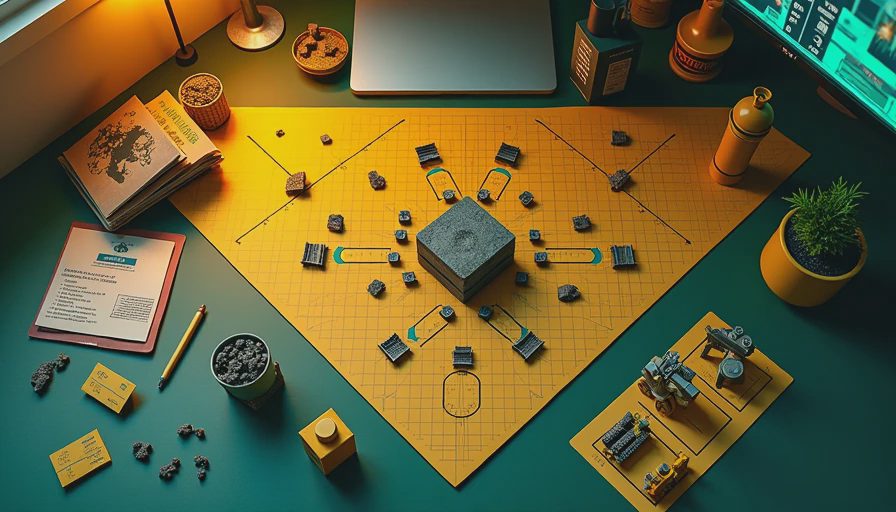
Mindustry is the compact, combat-focused pick
Mindustry combines factory automation with tower defense. You extract resources, route them through production chains, research new technology, and defend your base from waves of enemies. Among games like Factorio, it is one of the easiest to recommend to players who want a clearer objective than simply making the numbers go up.
The building tools are straightforward, and the campaign provides structure without eliminating experimentation. You need ammunition, defenses, power, and materials at the same time, so a beautiful production line that cannot supply the front line is not much use. Multiplayer and custom maps add considerable replay value, especially if you enjoy solving scenarios with other players.
Mindustry is less cozy and less visually expansive than the big 3D options. It is also more accessible on modest hardware and works well in shorter sessions. Think of it as the sharp, efficient version of the factory formula: fewer decorative detours, more pressure, and a lot of belts that need to deliver the right thing before something explodes.
Timberborn is for builders who want personality
Timberborn is not a direct Factorio replacement, but it belongs on the same shortlist for a good reason: its systems interact constantly. You lead beaver communities through droughts, manage water, grow food, construct districts, and develop increasingly clever infrastructure. Production chains matter, but the central puzzle is making a settlement survive in a changing environment.
The game has more character than most industrial sandboxes. Wooden platforms, water wheels, irrigation channels, and vertical districts give your town a recognizable shape. You are still balancing inputs and outputs, but the result feels like a place rather than a diagram. That makes Timberborn a strong choice when factory games have started to look too gray and purely functional.
It suits players who like city builders with real constraints. You will still spend time checking inventories and fixing bottlenecks, but you also care about whether a district has enough water or whether your settlement can survive the next dry season. The beavers are charming; the resource planning is not messing around.
How to choose your next automation game
Start with the part of Factorio you want to preserve. If it is the joy of arranging machines and belts, Satisfactory and Dyson Sphere Program are the obvious destinations. If it is supply chains connected to a living settlement, try Captain of Industry or Timberborn. If you want constant tactical pressure, Mindustry is the better fit.
Also consider your tolerance for rebuilding. These games reward experimentation, but they do not all make mistakes equally painless. Satisfactory lets you dismantle and relocate with relative freedom, while a settlement game can punish poor planning through traffic, hunger, or a resource shortage. Watch a short gameplay video, check the current Steam reviews, and look at recent patch activity before spending $20 to $40 on an early-access project.
My practical shortlist of games like Factorio is simple: Satisfactory for 3D construction, Dyson Sphere Program for enormous scale, Captain of Industry for logistics, Mindustry for combat, and Timberborn for a warmer city-builder mood. If none of those sounds right, keep the search focused on the specific loop you miss rather than the label “automation.” That is how you avoid buying five similar factories and playing none of them.
Final recommendation for your backlog
Games like Factorio work best when they give you a problem worth returning to tomorrow. The graphics can be simple, the tutorial can be imperfect, and the first base can look like a plumbing emergency. What matters is whether the next improvement feels legible: one more train, a cleaner bus, a better power grid, or a production line that finally stops starving.
If you want the safest recommendation, start with Satisfactory. It offers a familiar automation foundation while changing the physical experience enough to feel fresh. Pick Dyson Sphere Program for a bigger, more abstract challenge, or Mindustry if you need goals and enemies right away. Factorio itself is still the benchmark, but these alternatives prove that the factory itch has more than one excellent cure.



Letters
No letters yet — be the first to write.