If you are searching for games like Factorio, you probably do not just want another crafting game with a few conveyor belts. You want a system that starts as a scrappy outpost, becomes a humming industrial monster, and somehow turns “I will play for twenty minutes” into 2:00 a.m. Good management games do not just waste your time — they teach you how you like to spend it. The recommendations below focus on what actually makes automation satisfying: planning, throughput, logistics, research, and the small joy of fixing one terrible bottleneck at a time.
Satisfactory is the best first stop for 3D factory builders
Satisfactory is the obvious recommendation, but obvious does not mean wrong. It takes the factory-building core and places it in a first-person 3D world, where you explore an alien planet, mine resources, build production lines, and gradually cover the landscape with steel, concrete, pipes, and increasingly unreasonable belts.
The biggest difference is perspective. Factorio asks you to read a sprawling plan from above, while Satisfactory makes you walk through your own industrial creation. A production line is not just an abstract arrangement; it is a physical place you can tour. That makes construction more tactile and gives the game a pleasant sense of scale.
Choose Satisfactory if you enjoy building beautiful factories as much as optimizing them. It is less combat-focused and less immediately hostile than Factorio, though exploration and resource planning still matter. The early hours are approachable, but later tiers introduce enough complexity to satisfy serious spreadsheet goblins. Among games like Factorio, this is the cleanest choice for players who want a first-person factory vacation that slowly becomes an infrastructure crisis.
Dyson Sphere Program is for players who want a bigger problem
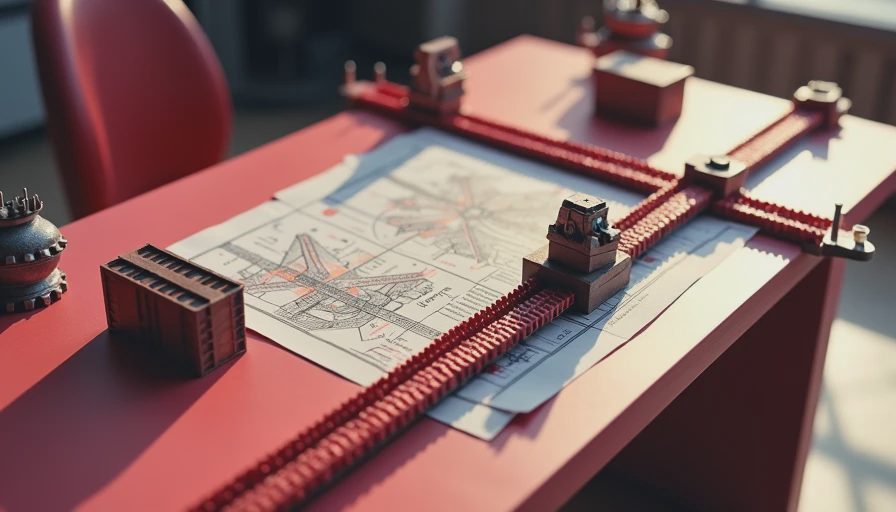
Dyson Sphere Program takes the automation fantasy and points it at the stars. You begin on a planet with a handful of machines, then expand across multiple worlds, establish interplanetary logistics, and eventually build a Dyson sphere around a star. The scale is the selling point. A factory is not the final destination here; it is one component in a solar-system-sized supply chain.
The game has a calmer rhythm than Factorio. You can spend long stretches arranging production, balancing power, and watching logistics vessels move between planets without fighting constant attacks. That makes it a strong match for players who like the planning side of automation but do not need enemies interrupting every expansion.
Dyson Sphere Program is especially good when you want games like Factorio with a stronger sense of wonder. The interface takes some learning, and the later resource chains can become dense, but the progression keeps offering a new scale to consider. If building one efficient factory feels satisfying, building a network of them across several planets feels like the same hobby after drinking an ambitious amount of coffee.
Against the Storm adds city-building pressure
Against the Storm is not a traditional factory game, and that is exactly why it belongs on this list. It mixes roguelite progression with city-building, asking you to establish settlements in dangerous wilderness, satisfy several species, and complete objectives before the storm destroys the colony. Each settlement is temporary, but your permanent upgrades make future runs more capable.
The appeal for automation fans is the constant need to turn limited inputs into a stable production chain. You must assign workers, place buildings, manage recipes, and decide which goods deserve scarce materials. A bakery is never just a bakery when one production choice affects food, morale, trade, and the settlement’s survival.
Pick Against the Storm if you like games like Factorio but want shorter sessions and more meaningful resets. It does not offer endless belt optimization or one permanent mega-base. Instead, it tests whether you can make a functional system under pressure. Good in theory, busy in practice is a real danger in management games; this one usually earns its complexity because every decision has a visible consequence.

Captain of Industry rewards careful resource planning
Captain of Industry sits closer to Factorio’s industrial side, with mining, manufacturing, logistics, research, and a colony that needs actual food and housing. You build on an island, extract raw materials, process them through increasingly complicated chains, and reshape the terrain with massive earthmoving equipment.
What makes it stand out is the weight of resources. Waste products matter. Storage matters. Fuel matters. A poorly planned mine can leave you with a logistical headache that no amount of optimistic belt placement will solve. The game feels designed for players who enjoy looking at a production graph and asking why everything stopped working after adding one new item.
This is one of the best games like Factorio for people who want an industrial simulation with more survival and settlement management. It is less instantly readable than Satisfactory, and its interface asks for patience, but the payoff is substantial. You are not simply assembling machines. You are managing an entire production economy where transport distance, power generation, and land use all shape the next expansion.
Mindustry is the leaner, combat-heavy alternative
Mindustry combines factory automation with tower defense. You mine resources, build conveyors and processors, manufacture ammunition, and defend your base from waves of enemies. The premise sounds like a novelty until the production chain starts tightening around you. Suddenly, your power network is inadequate, your ammo line is late, and the enemy is politely waiting to expose every bad decision.
It is a good option if you want games like Factorio with faster missions and more direct pressure. Mindustry is also easier to recommend to budget-conscious players because it offers a lot of depth without demanding the same full-price commitment as larger simulation releases. The presentation is functional rather than luxurious, but that works in its favor: the game gets out of the way and lets the systems do the talking.
Expect less wandering and more tactical problem-solving. You are not building a factory just because it looks nice. You are building it because the next wave arrives in three minutes and your copper supply is embarrassing.
How to choose among these factory games
Start with Satisfactory if you want exploration, first-person construction, and a factory you can physically walk through. Pick Dyson Sphere Program if your favorite part of Factorio is scaling production into a huge logistical network. Try Against the Storm if you prefer compact runs, shifting objectives, and city-building decisions with real pressure. Captain of Industry is the choice for players who want deeper industrial management, while Mindustry suits anyone who wants automation tied directly to combat.
There is no universal best pick among games like Factorio because the original game supports several different kinds of satisfaction. Some players want perfect ratios. Others want a beautiful base, a challenging campaign, or a calm evening of watching machines work. Before buying, check whether you want an endless sandbox or structured scenarios, active combat or peaceful planning, and a clean interface or a more demanding simulation.
For my money, Satisfactory is the safest recommendation, Dyson Sphere Program is the most impressive escalation, and Against the Storm is the best change of pace. All three understand the important part: the machine is only half the reward. The other half is realizing that your messy first solution has quietly become a system you can trust. If that is the feeling you are chasing, these games like Factorio are worth a serious spot on your Steam wishlist.



Letters
No letters yet — be the first to write.