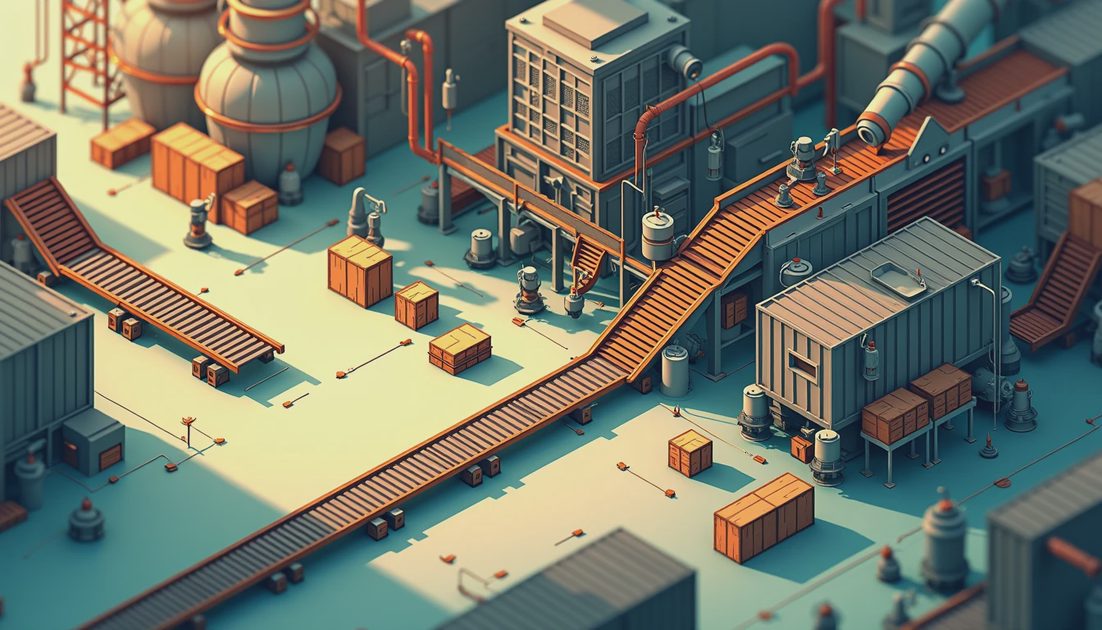
There is a particular pleasure unique to automation games: the moment a messy, hand-fed production line becomes a self-running machine, and then that machine grows into something larger than you can easily track by eye. You stop placing every inserter by hand and start designing systems that feed other systems. The factory (or planetary network, or shape-processing web) begins to feel alive.
These are the Steam games that deliver that feeling most cleanly. The focus is on titles where scaling is not just possible but deeply satisfying to watch and refine.
Factorio
Still the benchmark.
You begin with a few burners and end up redesigning entire rail networks because one segment of the main bus is three seconds too slow. The joy is purely systemic: ratios, throughput, bottlenecks, and the slow realization that yesterday’s clever layout is today’s problem. The Space Age content expanded the late game without diluting the core fantasy. If you want the purest expression of “build a machine that builds the machine,” this remains the standard.
Best for: Players who want maximum logistical depth and do not mind a steeper learning curve.
Satisfactory
First-person scale with vertical freedom.
The same core addiction as Factorio — resource extraction, production chains, automation — but in three dimensions on an alien planet. Watching multi-story factories and long conveyor highways come online has a different physical satisfaction. Exploration and the sense of place are stronger; the optimization pressure is slightly softer. 1.0 made the experience more complete without removing the urge to rebuild everything “properly.”
Best for: Players who want factory logistics with more spatial presence and the option to play co-op.

Dyson Sphere Program
Scale as the main feature.
Early game feels familiar: miners, smelters, assemblers, power. Then the map stops being the map. You leave the starting planet, specialize worlds, and move materials across a star system. The pleasure of watching systems scale becomes literal — from a small workshop to interstellar logistics aimed at building a Dyson sphere. It is still in Early Access, but the core loop of escalating complexity has been solid for years.
Best for: Players who specifically want the fantasy of production that outgrows a single planet.
shapez 2
Pure belt-and-shape logic.
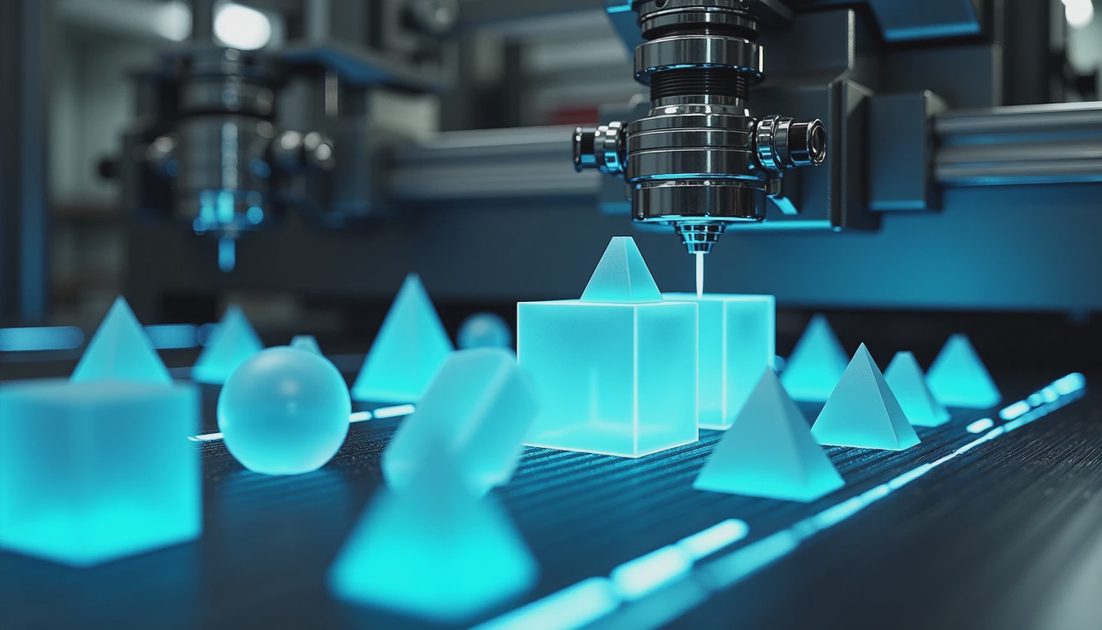
No combat, minimal story, almost no resource scarcity pressure. You cut, rotate, paint, stack, and route shapes through increasingly complex factories. The satisfaction is entirely in the clarity of the systems and the elegance of the solution. It is the cleanest “automation for automation’s sake” experience currently available, and the 1.0 version refined the tools without adding unnecessary layers.
Best for: Players who want the routing and scaling pleasure of Factorio with fewer external pressures.
Mindustry
Automation that feeds defense.
Production lines exist to supply turrets, units, and the next expansion of your base. The scaling fantasy is still present, but it is tied to survival and territorial control. It is more approachable than Factorio in some ways and offers a different rhythm: you automate so the factory can protect itself and grow under pressure.
Best for: Players who like factory systems but also want an external threat that makes throughput matter in a more immediate way.
Captain of Industry
Industrial scaling with economic weight.
You manage an entire industrial economy from raw extraction through finished goods, power, and pollution. The systems reward long-term planning and resilient supply chains. Watching a small outpost become a complex, interdependent industrial network has a grounded satisfaction that pure abstract factory games sometimes lack.
Best for: Players who want automation and logistics with a stronger civilizational and economic layer.
Quick Guide by Preference
Purest logistical depth → Factorio
First-person and vertical building → Satisfactory
Interstellar scale → Dyson Sphere Program
Cleanest abstract automation → shapez 2
Automation plus defense → Mindustry
Industrial + economic systems → Captain of Industry
The best automation games share one quality: they make growth feel like discovery rather than just bigger numbers. You stop micromanaging individual machines and start thinking in flows, buffers, and dependencies. When that shift happens, watching the system run becomes its own reward.
If you already own two or three of these and still want more of that specific feeling, the next post in this lane will look at what actually keeps an automation loop addictive after the first major rebuild.




Letters
No letters yet — be the first to write.