River towns are one of my favorite setups in simulation games because they turn a familiar city-builder problem into something more readable. You are not just placing houses on an empty grid. You are working around bends, bridges, floodplains, docks, and that one awkward patch of land where every sensible road refuses to fit. The best river towns make geography feel like a useful constraint rather than a punishment.
This is for the kind of player who likes watching a settlement become legible over time. You start with a few homes, a market, and a muddy crossing. A few hours later, there is a commercial district near the water, a farming belt outside the walls, and a bridge everyone uses even though you built a second one specifically to avoid that traffic. Good management games do not just waste your time; they teach you how you like to spend it.
Why river towns work so well in city-builders
A river gives a map instant structure. In a flat sandbox, the first twenty minutes can feel like administrative homework: place a road, place a service building, draw another road, wonder why the traffic simulation is already angry. River towns provide a visual anchor. The water divides the map, suggests a route, and gives you an obvious reason to build outward.
That does not mean the river should be decorative. In stronger games, it affects production, transport, housing value, and expansion. A warehouse near a dock can shorten a supply chain. A bridge can turn a quiet neighborhood into a bottleneck. A waterfront district might look excellent while quietly making emergency services take twice as long to arrive. These small interactions are where the setting earns its keep.
The satisfying part is that the problems are usually understandable. If workers are stuck crossing one bridge, you can see the cause. If a new district feels isolated, the answer is probably a road, ferry, or better placement of services. River towns give your mistakes a shape, which makes fixing them more rewarding than staring at a spreadsheet full of red icons.
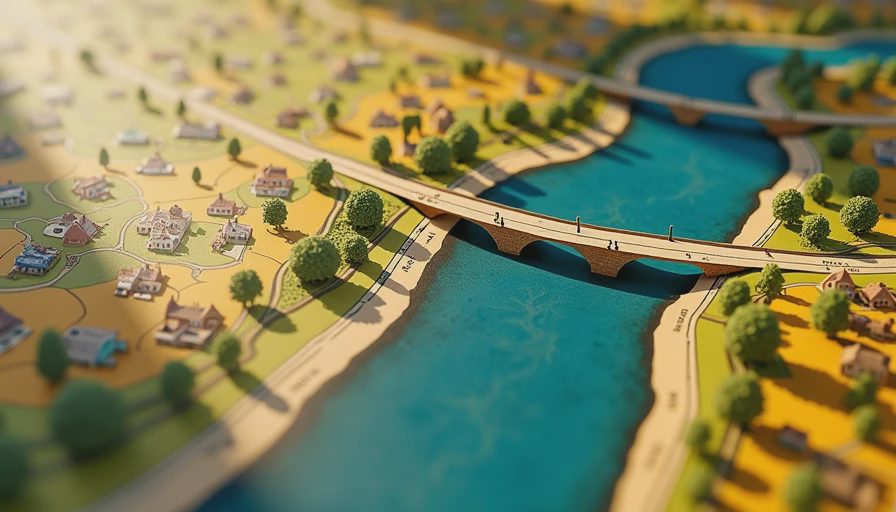
The games that understand the fantasy
Not every game with a river is really about river towns. Some use water as a pretty border while the actual systems happen entirely inland. That can still be pleasant, but it is a different promise. I want the river to matter enough that removing it would change the way I plan.
Cities: Skylines is the obvious large-scale option when you want roads, zoning, public services, and traffic to collide at metropolitan scale. Its water tools can support memorable layouts, although the game is less cozy once congestion begins eating your evening. Townscaper is almost the opposite experience: no serious economy, no supply chain, and barely any pressure, but it is excellent for quickly sketching colorful river towns without being asked to optimize them.
Against that, Manor Lords offers a more grounded medieval settlement fantasy. Its production chains and organic-looking villages make a river crossing feel like part of a settlement’s history rather than a line on a planning grid. Anno 1800 is better for players who want industry, shipping, and complicated trade relationships. It is gorgeous, demanding, and absolutely capable of turning a relaxing session into an audit.
What to look for before buying
Start with the map tools. Can you shape districts around the water, or are you limited to a few preset bridges? Can you build docks, ferries, retaining walls, or canals? A game does not need all of these features, but it should give the river a meaningful role if that is the reason you are interested.
Next, inspect the logistics. River towns are at their best when movement matters. Look for games where goods travel from farms or mines to storage, then toward markets or export points. The most satisfying systems let you shorten those routes through smart placement instead of simply upgrading every building until the problem disappears.
Finally, check the pace. Some city-builders demand constant intervention, while others let a settlement run for ten minutes without collapsing. If you want a weekend comfort game, a title with pause controls, adjustable difficulty, and forgiving early production is probably a better fit than a hardcore economic sandbox. Steam reviews are useful here, especially when players explain whether the late game becomes deeper or merely busier.
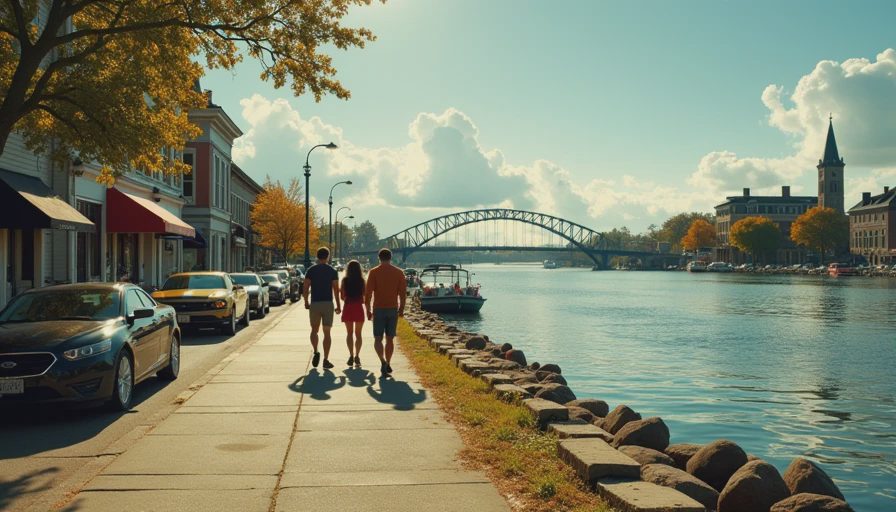
Three ways to build a better waterfront
The first approach is the working river town. Put warehouses, workshops, markets, and transport links close to the water. Keep housing nearby but not directly inside the loudest industrial zone. This layout is practical, compact, and ideal for players who enjoy watching resources move with minimal wasted distance.
The second is the postcard town. Reserve the best shoreline for plazas, parks, promenades, and attractive housing. Push heavy production farther inland, then connect it with a dedicated road or rail line. This costs more space and can create traffic headaches, but the finished settlement has the kind of visual payoff that makes screenshots worth taking.
The third is the divided town. Build two neighborhoods with different identities on opposite banks. One side can handle farming and basic materials while the other becomes the civic or commercial center. Add one reliable bridge first, then a second crossing only when demand justifies it. This creates a natural progression and prevents the common mistake of covering the map with bridges before the population can support them.
Common mistakes that make the setting feel flat
The biggest mistake is building parallel to the river without interacting with it. If every road ignores the shoreline, your map could have been any random valley. Give the water a job: transport, defense, irrigation, scenery, or a boundary that shapes expansion.
Another problem is placing critical services on the far side of a single bridge. Fire stations, clinics, and schools should serve the neighborhoods they can reach quickly. A beautiful central district is not worth much if a traffic jam turns every emergency into a coin flip.
Players also tend to overbuild waterfront housing too early. The view is tempting, but premium districts need an economy behind them. Establish food, storage, and basic services first. Then let the shoreline develop when the town can afford attractive extras. That order makes river towns feel grown rather than painted on.
My shortlist for your next install
If you want the clearest city-planning sandbox, start with Cities: Skylines and treat the water as a traffic and zoning puzzle. If you want a low-pressure creative toy, Townscaper is the cleanest recommendation and an excellent way to spend half an hour before bed. If you want medieval logistics, Manor Lords is the more atmospheric pick, though its systems reward patience. For industrial chains and maritime trade, Anno 1800 remains the heavyweight choice, provided you actually enjoy managing several islands at once.
The best river towns are not necessarily the most detailed ones. They are the games where the setting changes your decisions, gives your districts a reason to exist, and makes a bridge feel like a meaningful piece of infrastructure. If you liked a standard city-builder but wished the map had more personality, put one of these on your wishlist. Good in theory, busy in practice is a real category in this genre, so look for a demo, read recent reviews, and buy the game whose problems sound like the kind you want to solve.




Letters
No letters yet — be the first to write.